


WhatsApp:+86 1877 157 8889
Email:sales03@txantenna.com



UAVs (drones) rely on GPS/GNSS antennas for precise positioning—whether it's aerial surveying requiring centimeter-level accuracy, power line inspection needing stable flight paths, or delivery drones navigating urban environments. However, UAVs operate in complex electromagnetic environments: urban canyons with signal reflections, industrial zones with EMI, and even intentional jamming in sensitive areas.
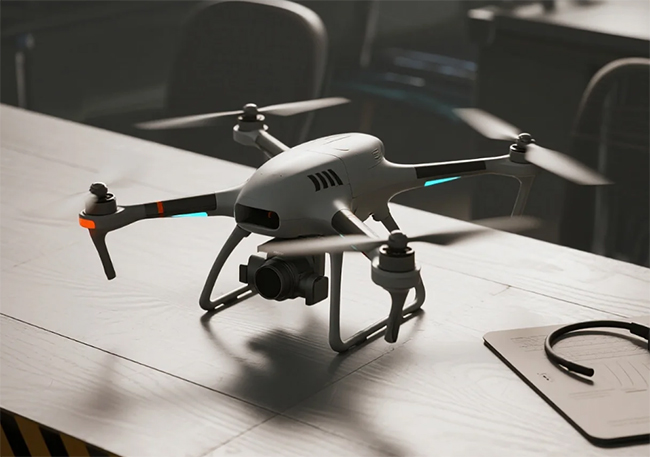
Poorly designed GPS/GNSS antennas succumb to these interferences, leading to positioning drift, flight instability, and mission failure. For UAV manufacturers and operators, anti-interference design is not just a “nice-to-have”—it’s a critical requirement. Tengxiang Electronics, a professional UAV antenna manufacturer, integrates advanced anti-interference technology into every GPS/GNSS antenna, ensuring reliable performance in the toughest conditions.
Why UAV GPS/GNSS Antennas Are Vulnerable to Interference
UAVs face three main types of interference that disrupt GPS/GNSS signals:
- Electromagnetic Interference (EMI) : From UAV components (motors, flight controllers, image transmitters) and external sources (power lines, factory equipment, other wireless devices).
- Signal Blockage & Reflection : From buildings, trees, and terrain (urban canyons, mountainous areas) that block or reflect satellite signals.
- Intentional Jamming : Rare but critical in sensitive areas, where devices emit signals to disrupt GPS/GNSS reception.
These interferences can cause positioning errors of meters or even complete signal loss—catastrophic for missions like precision surveying or industrial inspection.
How Tengxiang's Anti-Interference Design Solves These Issues?
Tengxiang’s R&D team (20+ years of RF expertise) has developed three core anti-interference technologies for UAV GPS/GNSS antennas:
1. Multi-Layer Electromagnetic Shielding : Our antennas feature a custom shielding layer (titanium alloy or copper) that blocks EMI from UAV motors and external sources. This shielding is precision-engineered to avoid blocking satellite signals while isolating interference.
2. Multi-Satellite System Compatibility : By supporting multiple GNSS bands (GPS, BeiDou, GLONASS, Galileo), our antennas receive signals from more satellites, reducing the impact of signal blockage. If one satellite signal is disrupted, the antenna switches seamlessly to others, maintaining positioning stability.
3. Low-Noise Amplifier (LNA) Optimization : We integrate high-performance LNAs with low noise figures (<1.5dB) to amplify weak satellite signals without boosting interference. This is critical for UAVs operating in urban canyons or remote areas with weak signal reception.
Additional UAV-Specific Design Advantages
Beyond anti-interference, Tengxiang’s GPS/GNSS antennas are tailored to UAV requirements:
- Compact & Lightweight : Sub-millimeter design (weight ≤15g) to avoid affecting UAV flight time and aerodynamics.
- Rugged Durability : IP67 waterproof/dustproof rating, salt spray resistance, and vibration testing to withstand outdoor missions (e.g., coastal surveying, low-temperature environments).
- Customization : We offer RTK-enabled high-precision models for surveying drones and low-power models for consumer UAVs, with flexible mounting options (top-mounted, embedded).
Real-World Results: Tengxiang’s UAV GPS/GNSS Antennas in Action
A Russian UAV manufacturer specializing in power line inspection partnered with Tengxiang to solve positioning drift caused by EMI from the drone’s image transmitter. Our anti-interference GPS/GNSS antenna eliminated drift, enabling the drone to maintain centimeter-level accuracy during 6-hour long-distance missions. The client reported a 40% reduction in mission rework and extended the drone’s operational range by 30%.
Whether you're building surveying drones, industrial inspection UAVs, or consumer delivery drones, anti-interference GPS/GNSS antennas are critical to mission success. Tengxiang’s custom solutions combine advanced anti-interference technology, UAV-specific design, and rugged durability—backed by our 12-year expertise as an antenna manufacturer. Contact our team today to enhance your UAV’s positioning reliability.
24H Rapid Response | Free Sample Available
Tengxiang Antenna is a professional OEM/ODM antenna designer and manufacturer. We specialize in WiFi7, 4G/5G/LTE, GPS/GNSS, and RF coaxial cable products, providing multi-band, custom solutions for global clients in automotive, UAV, industrial IoT, security, and smart home industries.
As a national high-tech enterprise with integrated production capacity, in-house labs, and international certifications, we are committed to delivering high-quality, fast-response antenna solutions to drive your business growth.
 Address:No.53, Shayong Rd, Shatou community, Chang'An town, Dongguan City, Guangdong, China (Post Code 523861)
 Email: sales03@txantenna.com
 Phone: +86 137 1249 7916 WhatsApp:+86 1877 157 8889
 Skype:Brady.Mao
 Address: No.53, Shayong Rd, Shatou community, Chang'An town, Dongguan City, Guangdong, China (Post Code 523861)
 Email: sales03@txantenna.com
 Phone: +86 137 1249 7916
WhatsApp: +86 1877 157 8889
Phone: +86 137 1249 7916
WhatsApp: +86 1877 157 8889


© 2026 Tengxiang Electronics Co Ltd. All Rights Reserved


