


WhatsApp:+86 1877 157 8889
Email:sales03@txantenna.com



WiFi antennas are frequently subject to various interferences during practical operation, which directly undermine network stability and transmission efficiency. Common interference sources include co-frequency signal superposition, complex electromagnetic surroundings, unreasonable equipment layout and mismatched antenna parameters. To tackle WiFi antenna signal interference, optimization should be carried out from multiple dimensions such as frequency band selection, antenna structure, installation environment and equipment configuration.
WiFi antennas generally operate on the 2.4GHz and 5GHz frequency bands. The 2.4GHz band boasts strong penetration and wide coverage, yet it suffers limited channel resources, leading to frequent channel overlap. When the number of surrounding routers rises, co-frequency interference becomes much more severe. The 5GHz band provides abundant channels with relatively less interference, while its signal coverage distance is shorter. Reasonable frequency band selection based on application environments helps reduce WiFi antenna signal interference.
The installation position of WiFi antennas exerts a vital influence on signal propagation. When antennas are placed close to metal objects, power cords and microwave devices, signal reflection and electromagnetic interference tend to occur. The recommended practice is to install WiFi antennas in open, unobstructed areas with proper height. For multi-antenna devices, adjusting antenna directions can realize space diversity and mitigate signal attenuation caused by multipath interference.
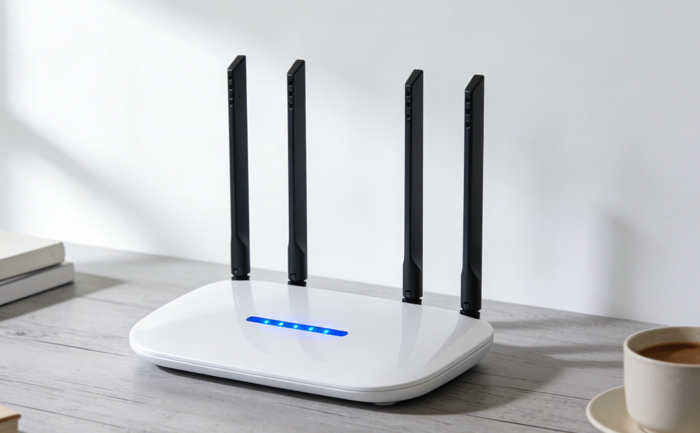
High-gain WiFi antennas can expand signal coverage under certain circumstances, yet they are not suitable for all scenarios. Higher gain corresponds to narrower radiation angles, which easily create coverage blind zones. In complex environments, selecting WiFi antennas with appropriate gain values contributes to overall network stability. Directional antennas are widely adopted in industrial scenarios to suppress interference sources.
Channel optimization is another effective solution to WiFi antenna interference. Wireless scanning tools can analyze surrounding channel occupancy, allowing users to pick low-interference channels and greatly improve signal quality. Some devices support automatic channel selection, which dynamically adjusts frequencies to adapt to changing environments.
In addition, the choice between internal and external antennas affects interference levels. External WiFi antennas feature flexible layout and make it easier to evade interference sources. Internal antennas require electromagnetic compatibility optimization at the product design stage to reduce signal disturbance from internal circuits.
24H Rapid Response | Free Sample Available
Tengxiang Antenna is a professional OEM/ODM antenna designer and manufacturer. We specialize in WiFi7, 4G/5G/LTE, GPS/GNSS, and RF coaxial cable products, providing multi-band, custom solutions for global clients in automotive, UAV, industrial IoT, security, and smart home industries.
As a national high-tech enterprise with integrated production capacity, in-house labs, and international certifications, we are committed to delivering high-quality, fast-response antenna solutions to drive your business growth.
 Address:No.53, Shayong Rd, Shatou community, Chang'An town, Dongguan City, Guangdong, China (Post Code 523861)
 Email: sales03@txantenna.com
 Phone: +86 137 1249 7916 WhatsApp:+86 1877 157 8889
 Skype:Brady.Mao
 Address: No.53, Shayong Rd, Shatou community, Chang'An town, Dongguan City, Guangdong, China (Post Code 523861)
 Email: sales03@txantenna.com
 Phone: +86 137 1249 7916
WhatsApp: +86 1877 157 8889
Phone: +86 137 1249 7916
WhatsApp: +86 1877 157 8889


© 2026 Tengxiang Electronics Co Ltd. All Rights Reserved


